Why Practice Sessions Are Essential for Human Factors Validation Studies
By Margot Helm, M.S., Senior Human Factors Engineer, Interface Analysis Associates LLC
In human factors research, the difference between a study that yields meaningful data and one that is full of study artifacts and use errors often comes down to a single step that teams routinely undervalue: the practice session. Not a quick skim of the script the morning of your first session, but a real-time walkthrough of the full session with the study team and mock participants, conducted exactly as the study will be run with participants.
Doing a full practice session with the team can feel time-consuming, so it often gets cut when the schedule is tight. However, it is one of the most valuable steps in the study preparation process.
Here are six reasons why practicing your study session before the first participant arrives can improve both your research process and outcomes.
1. Uncover Issues & Opportunities
Reading over a script is not the same as running through it in real time. When you go through a session in real time—at the same pace a participant will experience—you uncover any awkward sentences, confusing prompts, or transitions that seem fine on paper but feel clunky when you actually try to go through them.
It’s also an opportunity to refine procedural details, such as:
- Placement of study supplies for the moderator or participant
- Prompts to support the moderator in consistently introducing scenarios
- Checking/adjusting camera angles, and making note of specific subtasks or locations that may need a zoomed in view to capture important details
2. Adjust Metrics
It’s a straightforward process to create a list of evaluation measures in the abstract. However, it is in the practice session where you can identify any differences between what you expect to observe and what is actually observable.
You may find that:
- A performance task (where participants demonstrate or perform an action using the product) is ambiguous or difficult to score reliably, making a knowledge task more appropriate (e.g., checking a product’s expiration date or evaluating the appearance of a liquid medication)
- A rating scale gets applied inconsistently because the anchors need more precise definitions
Discovering these issues in a practice session means you can refine your evaluation metrics before you run any participants.
3. Sharpen Knowledge Tasks
Knowledge tasks—questions designed to probe what participants understand, recall, or can articulate based on the product instructions—are hard to write well on the first pass.
When you run through these questions with a member playing the role of participant, preferably someone who has not been previously exposed to the product or your study development, the gaps and problems become immediately apparent.
You may identify knowledge tasks that are:
- Too broad and have a range of plausible answers
- Precise, but worded in a way that is convoluted or confusing
- Leading (inadvertently suggesting or conveying the answer)
- Probing for information that the session never actually gives participants the chance to acquire (e.g., packaging that the participant doesn’t interact with, or details that have been removed from the final Instructions for Use)
The practice session is a chance to identify and strengthen these questions until they do exactly what you intend.
4. Reduce Study Artifacts
Study artifacts—the participant behaviors that occur due to the study design rather than the product—sometimes trace back to ambiguous or inconsistent communication between the moderator and participant.
When participants don’t understand a question or the task you are asking them to do, they may ask for clarification. However, if they misunderstand, they may work around it in undesirable or unpredictable ways. When transitions between tasks are awkward, participants may also carry over confusion or anxiety from one task into the next.
The practice session uncovers wording that may be unclear and gives you the opportunity to make adjustments.
5. Optimize Session Timing and Video Capture
Timing estimates made during protocol development are almost always wrong. Not wildly wrong, but wrong enough to matter for scheduling purposes. Tasks may take longer than expected: participants may decide to read the instructions fully before starting, read through each step more than once, stop to ask questions, or explore in directions you did not anticipate. Other times, you may discover that the script has been significantly cleaned up and is now shorter than you had originally anticipated.
The practice session gives you a measured, grounded estimate of how long each segment of the study will actually take. Armed with that insight, you can:
- Build a schedule that provides adequate time for participants to complete all tasks so the session does not feel rushed for either the participant or the moderator
- Add in buffer time between sessions to allow the study team to regroup and discuss observations, or rest between longer sessions
- Set realistic expectations for participants about how long the session will take
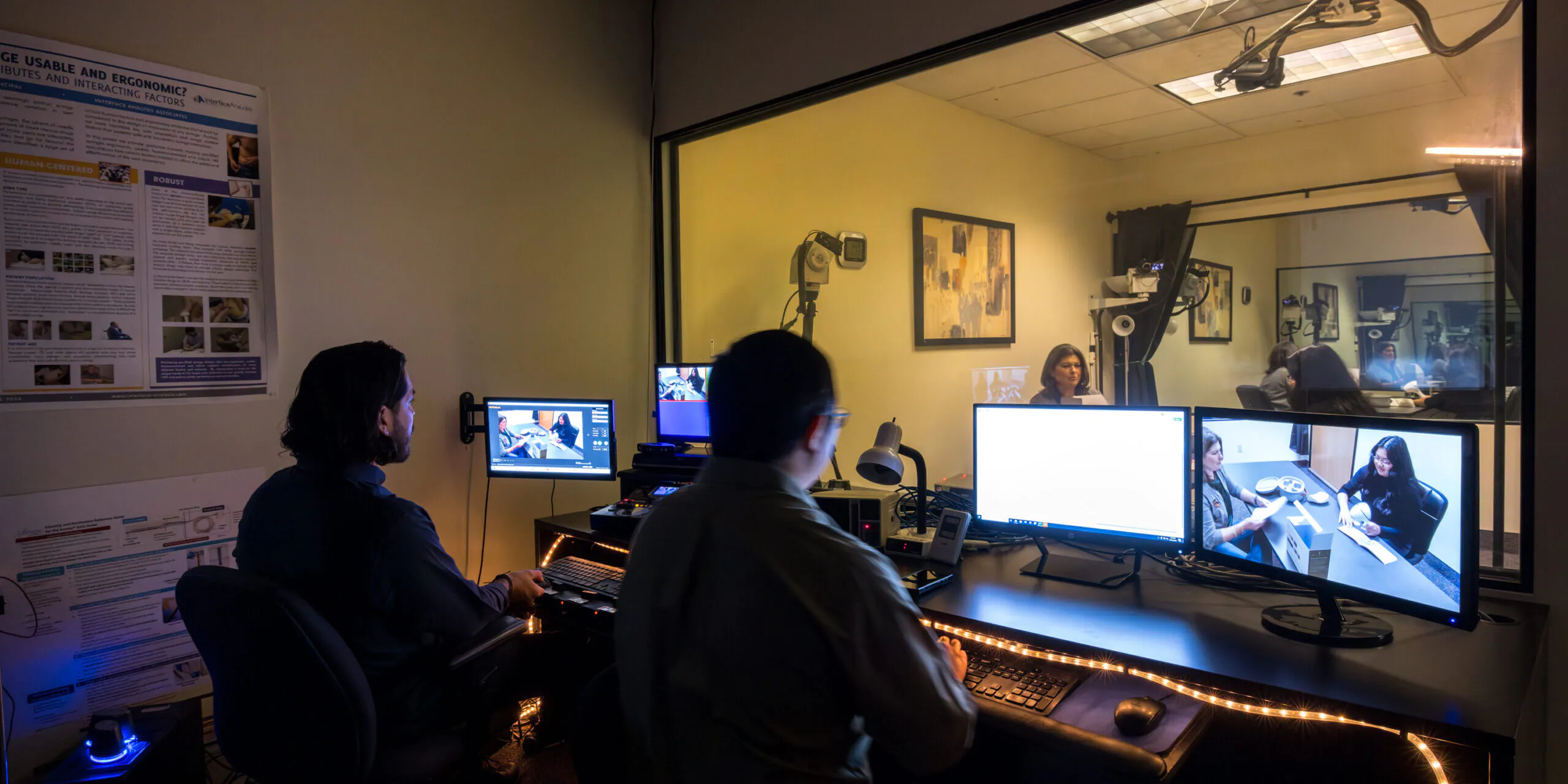
Another benefit of practice is optimizing video capture of the study. Which camera should we use when? Which angle is the best to support evaluation of the relevant metrics? These questions can be answered and perfected only through practice.
6. Deliver Prompts More Naturally
Moderating is a skill, and like any skill, it improves with practice. Reading a prompt from a script is very different from delivering that prompt in a way that feels conversational, maintains rapport, and does not inadvertently bias participant responses.
The practice session gives the moderator a chance to internalize the flow of the session, get comfortable with the language of each prompt, and develop the muscle memory to transition smoothly between tasks. By the time the first participant arrives, the moderator is not sight-reading, they are performing.
This matters not only for the moderator’s confidence, but for data quality. Participants respond differently to a moderator who seems composed and natural versus one who appears to be working through the script in real time. Comfort is contagious, as is uncertainty.
The Cost of Skipping Practice
You may be tempted to abbreviate or skip doing a practice session, something akin to a fast walkthrough. Study prep is already time-intensive, and it can feel redundant to gather the full team to run through a script that you have already spent substantial time writing and reviewing in detail.
But the hidden cost of skipping the practice session will inevitably show up in your data: in performance tasks you cannot observe reliably, in knowledge task questions that don’t quite work, in avoidable study artifacts that add noise to your findings. Discovering these issues in the middle of the study may mean you have already compromised or lost irreplaceable data, ultimately costing you time and resources.
Conclusion
In human factors research, the practice session is an essential investment in your study’s success. Build it into your timeline and treat it seriously. Doing so will strengthen the validity of your findings and yield more reliable, actionable insights.
Have questions about human factors validation studies? Connect with the IAA team to learn how thoughtful study design can deliver meaningful, reliable results.

Margot Helm earned a Master of Science in human factors and ergonomics from San Jose State University in May 2022. She joined Interface Analysis Associates in January 2022, where she focuses on usability research and applying perceptual, cognitive, and ergonomic principles to the design and evaluation of medical devices and digital health systems.
Before transitioning to human factors, Margot specialized in developing, optimizing, and validating analytical methodologies for oncology pharmaceuticals. She also trained analysts in current good manufacturing practice laboratory procedures. Margot holds a Bachelor of Arts in biochemistry from Wellesley College and has been an active member of the Human Factors and Ergonomics Society since 2020.
Related Posts